Solenoid valves are essential components in fluid control systems, whether for liquids or gases. Choosing the right solenoid valve can improve system efficiency and prevent operational failures or damage. Conversely, an unsuitable valve can lead to decreased performance and even the risk of overall system damage.
In this article, we discuss tips for selecting the right solenoid valve for your application, including considerations for pressure and temperature, size and flow rate, material compatibility with the media, as well as durability and ease of maintenance.
Determining Pressure and Temperature Requirements
Operational Pressure (Pressure Rating)
Each solenoid valve has a specific working pressure limit. To ensure optimal performance:
-
Know the minimum pressure required for the valve to open and close properly.
-
Ensure the maximum pressure does not exceed the valve’s capacity to prevent damage.
-
Choose a solenoid valve with a pressure rating slightly higher than the system’s operating pressure to reduce the risk of overpressure.
Operational Temperature
The temperature of the liquid or gas media affects the valve’s lifespan and performance. Key points to consider:
-
Standard solenoid valves usually operate within a range of 0°C to 80°C.
-
For hot media such as steam, choose a valve with high-temperature resistance specifications.
-
Ensure the coil is heat-resistant if the valve will operate continuously at high temperatures.
Size Selection: Flow Rate and Connections
Valve Size (Diameter and Port Size)
The valve size should match the pipe diameter or connection in the system:
-
Available in sizes ¼”, ½”, ¾”, 1”, up to 2” or more.
-
Smaller sizes are suitable for precision systems, while larger sizes are used for high-flow applications.
Flow Rate
Each valve has a flow coefficient (Cv) indicating the media flow capacity:
Material Considerations Based on Media Type
Clean Liquids such as Water or Air
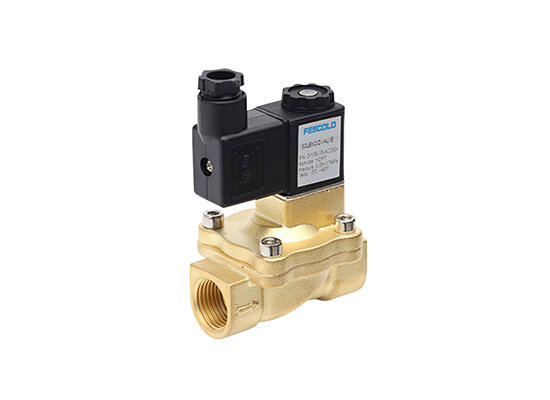
For neutral media, brass materials are economical and durable.
Corrosive or Chemical Liquids
For aggressive media, use:
Steam and High Temperatures
Use a valve with a stainless steel body and heat-resistant seals (EPDM or Teflon).
Reliability, Durability, and Ease of Maintenance
Operational Reliability
Choose a solenoid valve that:
-
Has IP65 protection or higher for outdoor or humid environments.
-
Has stable voltage according to the electrical system (AC/DC).
-
Uses a pilot-operated system for efficiency at high pressures.
Ease of Maintenance
Valves with readily available spare parts and easy assembly/disassembly for routine maintenance.
-
Technical manuals and support should be provided by the supplier.
-
The more complex the application, the more important the valve’s quality and serviceability.
Read also: 5 Signs Your Solenoid Valve Needs Replacement
Product Recommendations from PT Bina Usaha Tehnik
PT Bina Usaha Tehnik provides various types of solenoid valves for industrial, automation, HVAC, and specialized applications:
-
2-Way Brass Solenoid Valve: Ideal for water and air, available in various sizes.
-
Stainless Steel Solenoid Valve: Corrosion-resistant, suitable for chemical liquids.
-
High Temperature Solenoid Valve: Designed for steam systems and hot media.
-
Explosion Proof Solenoid Valve: For hazardous areas or heavy industrial environments.
All products come with technical consultation, spare part availability, and professional after-sales service.
Conclusion
Selecting the right solenoid valve requires a thorough understanding of operating pressure and temperature, pipe size and flow rate, material compatibility with the media, reliability, and ease of maintenance. With these tips for choosing the right solenoid valve for your application, your system will be more efficient, durable, and low-maintenance. PT Bina Usaha Tehnik is ready to provide the best solutions according to your industrial application needs.